Fabrics & Upholstery
The boucle sofa: texture, curves and care
What boucle is, how wool and synthetic boucle differ, how to plan a curved boucle sofa, and how to keep the loops looking good.
A boucle sofa is upholstered in boucle, a fabric woven or knitted from looped yarn. The loops give a nubbly, cloud-like surface that is soft to touch and catches light in small shadows, so even a plain cream boucle has depth. The fabric became closely associated with curved, sculptural sofas, and that pairing is still the most familiar. Boucle is more practical than it looks, provided you choose a well-made cloth and understand its one real weakness: loops can snag.
This guide covers what boucle is, how wool and synthetic versions differ, how to plan a curved boucle sofa, and how to care for boucle in Singapore’s warm, humid homes.
What boucle fabric is
The name comes from the French for “curled” or “looped”. Boucle yarn is made by twisting yarns at different tensions so that one forms loops around the other. Woven into cloth, those loops create the familiar texture. Loop size varies widely, from fine, tight bouclés that look almost like felted wool to chunky, open loops that read as sheepskin.
- Wool boucle. Springy, warm in tone, naturally resistant to soiling, and naturally fire-resistant according to the Woolmark Company. Usually the most expensive.
- Wool blend boucle. Wool with nylon, polyester or viscose for strength and cost. Often the best balance for upholstery.
- Polyester boucle. Affordable and stain-resistant, but can look flat or shiny and may pill. Quality varies widely.
- Cotton and linen boucle. Matt, relaxed and breathable, though looser loops can be less resilient.
Is a boucle fabric sofa practical?
| Concern | How boucle behaves | What helps |
|---|---|---|
| Stains | Texture disguises small marks; liquids can soak in | Choose a wool or treated cloth; blot spills at once |
| Snagging | Loops can catch on claws, zips, rings and velcro | Smaller, tighter loops; trim pulled loops, never pull them |
| Pilling | Some synthetic boucles pill with friction | Choose tightly constructed cloth; use a fabric shaver gently |
| Colour | Classic cream and white show soiling over time | Oatmeal, stone, taupe or tobacco hide wear better |
| Comfort in heat | Wool boucle breathes; dense synthetics can feel warm | Wool or natural blends in rooms that are not always air-conditioned |
With cats or dogs that like to knead, boucle is a risky choice. With young children, a tightly looped wool blend in a mid-tone is often more forgiving than a flat pale linen, because the texture hides small marks.
Planning a curved boucle sofa
The boucle curved sofa, often called a curved boucle sofa, has become a signature piece. Its soft arc invites conversation and suits rooms where the seating floats away from the walls. It needs more planning than a straight sofa.
Space and layout
- Allow depth. A curved sofa takes more floor depth than a straight one of the same seating capacity. Draw it to scale on your floor plan or mark it on the floor.
- Float it. Curves look best away from the wall, facing a fireplace, a view or another piece of seating. Pushed against a flat wall, the gap behind looks awkward.
- Use a round or organic rug. A rectangular rug fights the arc. A round or soft-edged rug follows it. Our sibling guide to the round carpet covers sizing.
- Check access. Curved sofas are often one piece. Measure lift doors, corridors and turns before ordering, particularly in older condos and shophouses with narrow stairs.
Comfort
Curved sofas are excellent for conversation but less suited to lying down. If the sofa is the main place to stretch out and watch television, a straight or modular sofa may serve better, with a curved piece as a secondary seat. Check seat depth and back height in person; some sculptural designs trade comfort for silhouette.
Boucle beyond the sofa
Because boucle is such a strong texture, one large piece is usually enough in a room. Repeating it on the sofa, armchairs, cushions and ottoman can feel heavy. Better to pair it with smoother surfaces: a velvet cushion, a linen curtain, a polished timber side table or a honed stone coffee table. Our guide to living room design looks at balancing textures across a room.
Caring for a boucle sofa
- Vacuum weekly with a soft upholstery brush, working gently with the direction of the loops. Avoid strong suction heads that drag at the yarn.
- Blot, never rub. Rubbing pulls loops and spreads stains. Blot from the outside in with a clean, white cloth.
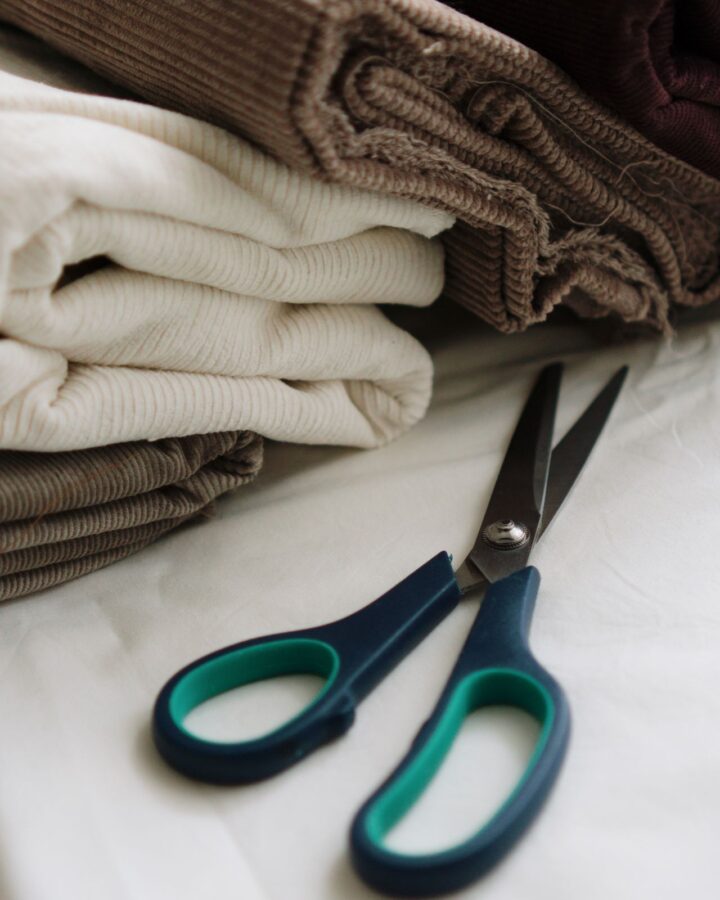
- Trim snags. If a loop is pulled, snip it level with the surface with small scissors. Pulling it will unravel more.
- Follow the cleaning code. Many boucles are dry clean or solvent clean only. Test any cleaner on a hidden area first.
- Rotate cushions so loops flatten evenly.
- Professional clean every year or two, especially for pale colours.
Boucle in a humid climate
Singapore’s annual mean relative humidity is in the low 80s per cent. Thick, looped fabrics hold dust and moisture more readily than smooth ones, so ventilation matters.
- Keep the room air-conditioned or well ventilated, and avoid closing it up for long periods.
- Leave a gap between the sofa and external walls.
- Pale wool boucle can yellow slightly with sun and time. Sheer curtains or UV film on nearby windows slow this.
- If a musty smell develops, air the sofa and have it professionally cleaned rather than spraying fragrances, which can stain.
What to ask before buying
- What is the fibre content? The name boucle describes the yarn structure, not the fibre. A wool-rich boucle and a polyester boucle can look similar in photographs and behave very differently.
- What is the abrasion and pilling rating? Ask for the test results and the intended use. A boucle made for cushions or throws may not suit a daily sofa.
- Are the covers removable? Fitted covers on seat cushions make cleaning much easier. Fully fixed upholstery on a curved frame cannot be removed.
- Can I see a large sample? Loop scale reads very differently on a palm-sized swatch and on a three-metre sofa. Ask for a larger cutting, and look at it in your own light.
- Is the cloth suitable for commercial use? For hotel lobbies, lounges and F&B seating, check fire performance requirements with the venue’s consultant or the relevant authority before specifying.
Re-covering in boucle
If you love the texture but already own a well-built sofa, re-covering it in boucle is an option. Boucle is thicker than many cloths, so the upholsterer may need to adjust patterns and allow for bulk at seams and piping. Not every sofa suits it: tight, tailored shapes with sharp corners can look lumpy in a chunky boucle, while softer, rounded forms take it naturally. Our page on sofa reupholstery explains the process.
Frequently asked questions
Does boucle stain easily?
Liquids can soak in, but the texture hides small marks well. Wool and treated boucles resist staining better than untreated cotton or loose synthetic loops.
Is a boucle sofa good with pets?
Generally not with cats or dogs that scratch or knead, because claws catch the loops. A tight, small-loop boucle is less vulnerable than a chunky one.
Will boucle go out of style?
Boucle has been used in upholstery for decades. Very chunky, bright white versions are tied to recent trends; a finer boucle in a warm neutral is more timeless.
How much space does a curved boucle sofa need?
More depth than a straight sofa, and space behind it to look intentional. Draw it to scale on your plan and leave walkways of around 80 to 90 cm.
Texture is one of the quietest ways to give a room warmth. If you are considering a boucle piece or a custom curved sofa, we would be glad to arrange a consultation. Our fabrics and upholstery page and our guide to choosing a fabric couch are good places to start.