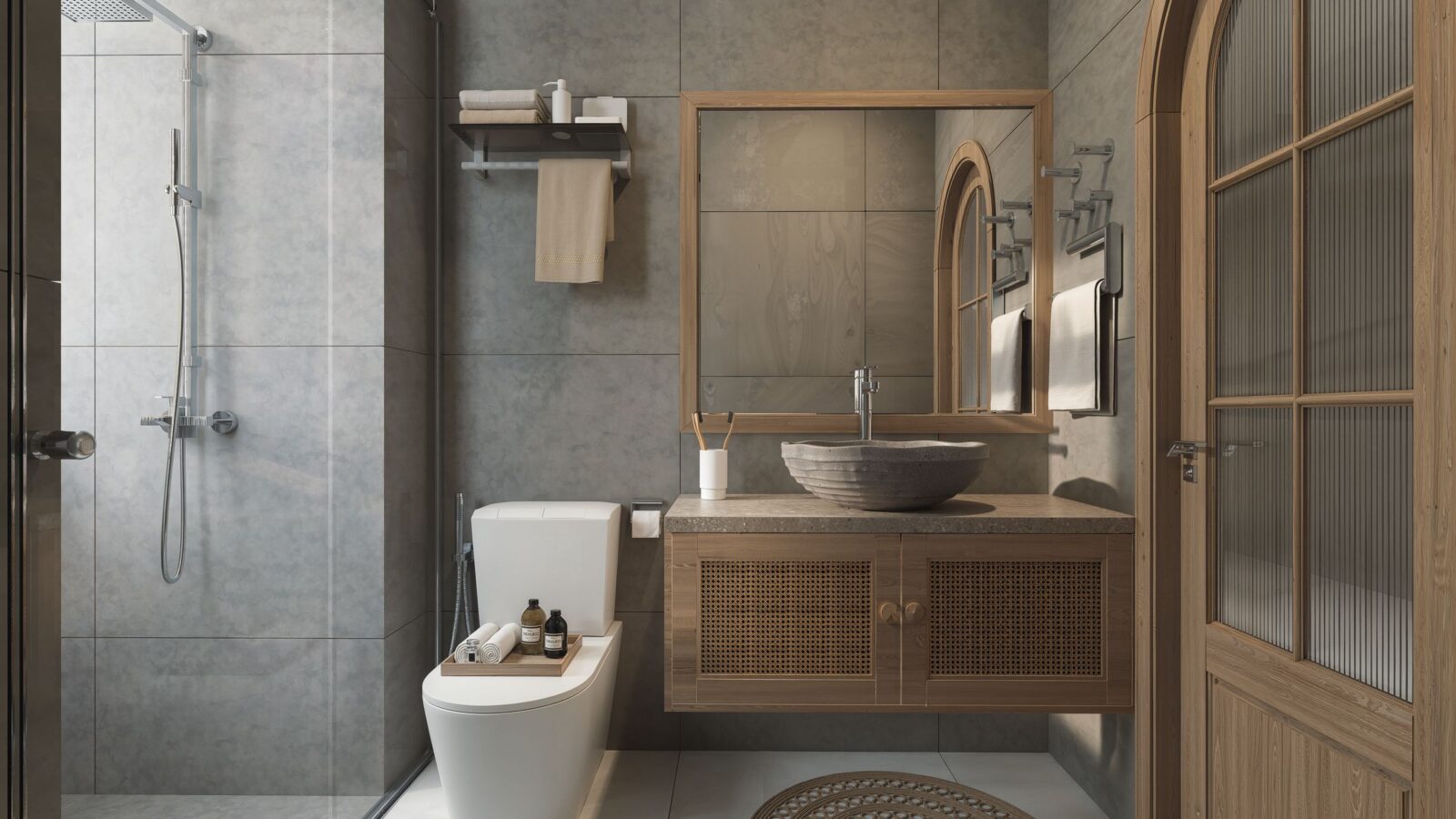
Carpets & Rugs
Grey bath rugs: choosing the shade, fibre and backing
Grey bath rugs suit almost any bathroom. Here is how to choose the shade, fibre and backing, and how to keep them dry and fresh in a humid home.
Grey bath rugs are a practical, calm choice for most bathrooms: they sit comfortably against white, stone, concrete-look and timber finishes, and they hide water marks and lint far better than white or very dark rugs. Choosing a good one comes down to three things: a shade of grey that suits your tiles and light, an absorbent fibre that dries quickly, and a backing that grips the floor safely without trapping moisture.
In Singapore, where bathrooms rarely dry out fully between showers, the drying question matters as much as the look. This guide covers shade, fibre, backing, size and care.
Choosing the right shade of grey
Grey is not one colour. It leans warm or cool, light or dark, and the wrong undertone can make a bathroom feel cold or muddy.
| Shade | Undertone | Pairs well with |
|---|---|---|
| Pale dove or silver grey | Cool | White tiles, chrome taps, small bathrooms |
| Warm greige or mushroom | Warm | Travertine, limestone, oak vanities, brass fittings |
| Mid stone grey | Neutral | Concrete-look tiles, microcement, terrazzo |
| Charcoal or slate | Cool or neutral | Pale floors where you want contrast; black fittings |
| Grey with blue | Cool | Coastal schemes, blue or green tiles |
A blue and grey rug, in stripes or a soft pattern, is a good way to add some colour to a neutral bathroom without committing to a bold tile. Mid greys are the most forgiving in daily use; very pale greys show hair and dust, and charcoal shows lint, soap and dried water marks.
Fibres for grey bath rugs
- Cotton. Absorbent, soft and machine washable. Long-loop or tufted cotton holds plenty of water but takes longer to dry; a flat-woven or waffle cotton dries faster.
- Microfibre and polyester chenille. Very absorbent and quick to dry. They feel plush and are inexpensive, but can flatten over time.
- Cotton with polyester blend. Combines absorbency with faster drying and better shape retention.
- Teak or other hardwood slatted mats. Not a rug, but a good alternative for wet rooms: water drains through and the mat dries quickly.
- Memory foam. Comfortable underfoot, but slow to dry and prone to odours in humid bathrooms.
For bathrooms without good ventilation, a thinner, quick-drying rug is better than a thick, plush one. The Meteorological Service Singapore gives a mean annual relative humidity of around 82%, so a dense rug can stay damp for hours unless it is hung up.
Backings and safety
A bath rug sits on a wet, smooth floor, so the backing has to grip.
- Rubber or TPR backings grip well on tile and can be machine washed at low temperatures. Check the care label; high heat in a dryer can crack them.
- Latex backings grip at first but tend to break down with washing and can leave residue on the floor.
- Unbacked rugs dry faster and can be washed hot, but need a separate non-slip underlay.
Some rubber backings can mark or discolour certain floors, such as natural stone, vinyl or sealed timber, over time. Lift the rug regularly so the floor beneath can dry. For more on keeping rugs in place, our guide to the anti slip rug covers underlays and grippers.
Sizes and placement
- Standard bath mat: roughly 50 by 80 cm, enough for one person to step onto from a shower.
- Larger rug: 60 by 90 cm or 70 by 120 cm, in front of a double vanity or freestanding bath.
- Runner: a long, narrow rug for galley bathrooms or in front of twin basins.
- Contour mat: a curved mat around a toilet base. It looks dated in most modern bathrooms and is better left out.
Place the rug where you step out of the shower, not where water runs. In a wet-and-dry layout, keep the rug firmly in the dry zone. If the bathroom has an unusual shape or you want a precise size and colour, a custom rug in a washable synthetic can be made to fit.
Bath rugs for different bathroom layouts
The layout of the bathroom decides how many rugs you need and where they go.
- Wet-and-dry bathrooms with a glass screen: one rug outside the shower door, in the dry zone, is usually enough. Keep it clear of the door’s swing so it does not catch.
- Walk-in showers without a door: water travels further, so place the rug a step or two away from the opening, and choose a quick-drying fibre.
- Bathrooms with a freestanding bath: a larger rug beside the bath, long enough to step onto with both feet, looks generous and feels comfortable.
- Double vanities: a runner in front of both basins, or two matching mats, keeps the layout symmetrical.
- Small common bathrooms: a single compact mat that can be hung up after use keeps the floor clear and the room easy to clean.
In en-suites that open directly onto a carpeted or timber bedroom floor, a rug at the threshold also stops damp feet carrying water into the next room. That is where an absorbent, well-backed grey bath rug earns its place.
Carrying grey through the home
Grey bath rugs often link to grey elsewhere. A pale grey carpet in an adjoining bedroom, or a dark grey carpet in a dressing room, can make an en-suite feel connected to the room beside it. Keep the shades related rather than identical: a mid grey bath rug next to a charcoal bedroom carpet reads as deliberate, while two near-matching greys can look like a near miss.
The same thinking applies to towels. A grey rug with grey towels in the same tone can feel flat; mixing in white, oatmeal or a muted blue adds depth. Our guide to bathroom decor covers textiles, accessories and art.
Washing and keeping rugs fresh
- Hang the rug over the bath edge or a rail after each use so both sides can dry.
- Wash weekly or fortnightly, depending on use, on a warm cycle for cotton and a gentle cycle for microfibre.
- Avoid fabric softener, which reduces absorbency.
- Line dry or tumble dry on low heat. Do not put rubber-backed rugs on high heat.
- Replace rugs once the backing starts to crumble or the pile no longer recovers.
Grey dyes can fade with repeated washing, especially in strong detergent. Wash with similar colours and use a detergent suited to coloured fabrics. Our guide to washable rugs covers more on choosing rugs that survive regular laundering.
Related reading: Rug backing fabric and Stain resistant rugs.
Frequently asked questions
Which grey bath rug colour is easiest to keep looking clean?
Mid greys and heathered or flecked greys hide lint, hair and water marks best. Very pale and very dark greys show more.
What fibre dries fastest?
Microfibre and thin, flat-woven cotton dry fastest. Thick cotton and memory foam take much longer, especially in humid bathrooms.
Are rubber-backed bath rugs safe?
They grip well on tile, but lift them regularly so the floor can dry, and check the backing has not cracked after washing.
How often should a bath rug be washed?
Every one to two weeks for most households, and more often in busy family bathrooms or if it smells damp.
Can a grey bath rug go in the washing machine with towels?
Usually yes, if the colours are similar and the care label allows it. Wash rubber-backed rugs on a cooler, gentler cycle than towels, and avoid hot tumble drying, which can crack the backing over time.
If you are designing a bathroom and want the textiles chosen alongside the tiles and fittings, you are welcome to arrange a consultation. Our carpets and rugs range shows the materials we work with.


